

Most businesses in Singapore think launching a website is the finish line.
It’s not.
It’s the starting point.
What happens after your website goes live determines whether it becomes a lead-generating asset — or slowly breaks, underperforms, and gets ignored by Google.
At SilentFrontier, one of the most common issues we see is this: websites that were built well… but never maintained.
And over time, they silently lose traffic, rankings, and conversions.
What Is Website Maintenance?
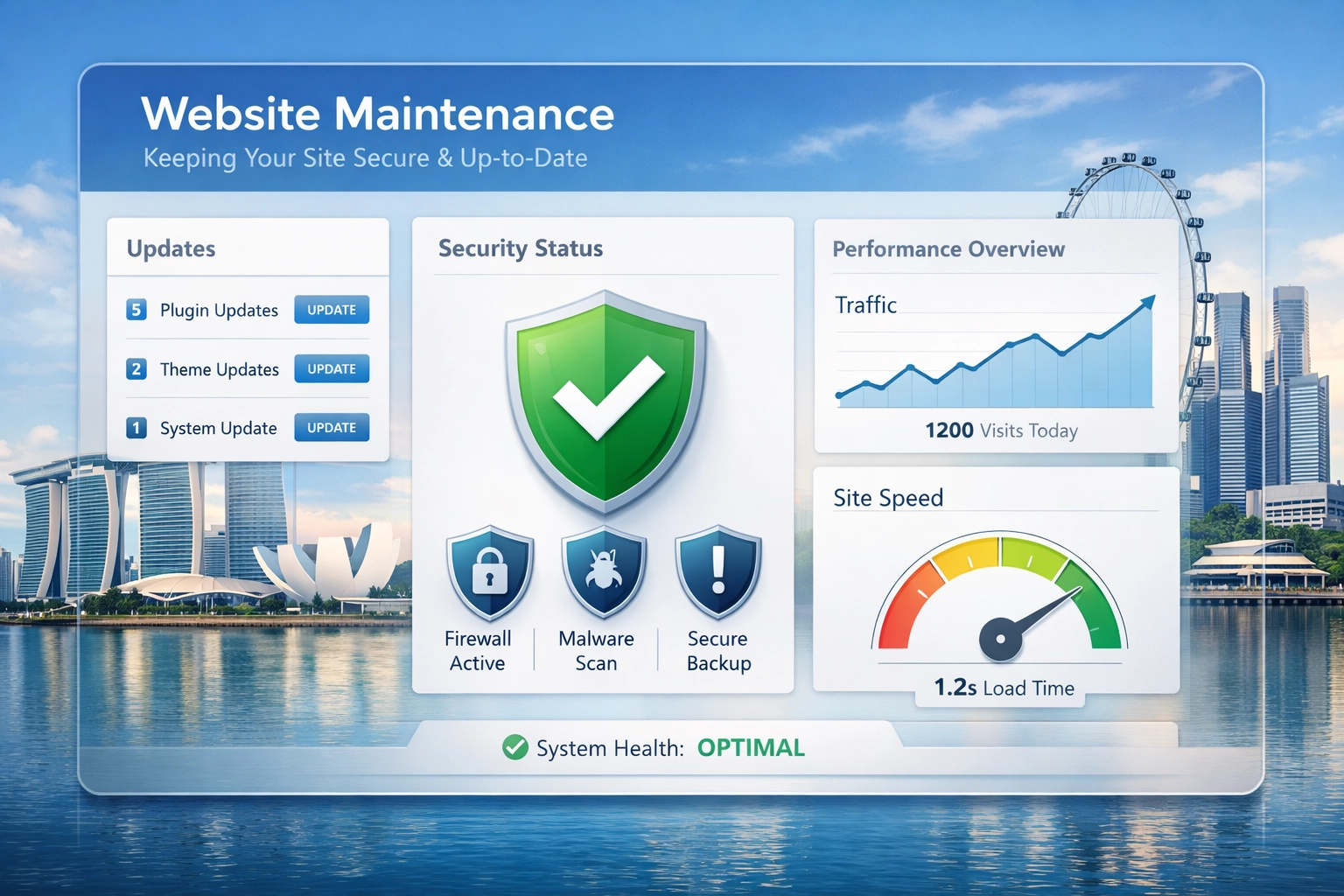
Website maintenance is the ongoing process of keeping your website:
- Updated
- Secure
- Fast
- Functional
It includes everything from technical updates to performance optimization and content updates.
Without maintenance, even a well-built website will degrade over time.
Why Website Maintenance Matters More Than You Think
A neglected website doesn’t fail instantly.
It fails gradually.
Here’s what happens:
- Plugins become outdated
- Security vulnerabilities increase
- Page speed slows down
- Broken links appear
- SEO rankings drop
You won’t notice it immediately — but your traffic and leads will decline.
1. Security Risks Increase Over Time
Websites built on platforms like WordPress require regular updates.
Outdated plugins and themes are one of the biggest entry points for hackers.
If your website gets compromised:
- Your data can be exposed
- Your website can go offline
- Google may blacklist your site
Fix:
- Regular plugin and theme updates
- Security monitoring
- Daily or weekly backups
2. Performance Drops Without Optimization
Over time, websites become slower due to:
- Unoptimized images
- Database clutter
- Plugin bloat
- Server issues
And as covered in our earlier article, slow websites kill conversions.
Fix:
- Regular speed audits
- Image optimization
- Database cleanup
- Performance monitoring
3. SEO Rankings Decline
Google favors websites that are:
- Active
- Updated
- Technically sound
If your website is outdated, it signals low relevance.
Common SEO issues from poor maintenance:
- Broken links
- Missing meta tags
- Outdated content
- Indexing errors
Fix:
- Update content regularly
- Fix technical errors
- Monitor search performance
4. Features Start Breaking
Forms stop working.
Buttons don’t respond.
Pages display incorrectly.
These issues often go unnoticed — until customers complain (or worse, leave silently).
Every broken element is a lost lead.
Fix:
- Regular functionality checks
- Form testing
- Cross-device testing
5. Poor User Experience Builds Up
Over time, small issues stack:
- Slow load times
- Outdated design
- Inconsistent layout
- Mobile responsiveness issues
Users judge your business based on your website experience.
If it feels outdated, your brand feels outdated.
What Website Maintenance Should Include
A proper maintenance plan covers:
- Technical Updates
- Plugins, themes, CMS updates
Security
- Malware scans
- Firewalls
- Backups
Performance
- Speed optimization
- Image compression
SEO Monitoring
- Keyword tracking
- Fixing errors
- Updating content
Functionality Checks
- Forms
- Links
- User flows
The Real Cost of Ignoring Maintenance
Skipping maintenance might save money short-term.
But long-term, it costs more:
- Lost leads
- Lower rankings
- Security risks
- Expensive emergency fixes
It’s like never servicing your car — eventually, something breaks.
Turn Your Website into a Long-Term Asset
A high-performing website is not static.
It evolves.
Businesses that consistently maintain their websites:
- Rank higher on Google
- Convert more visitors
- Build stronger trust
- Generate consistent leads
At SilentFrontier, we treat website maintenance as part of a growth system, not just technical support.
Because a website that’s maintained properly doesn’t just survive — it performs.