

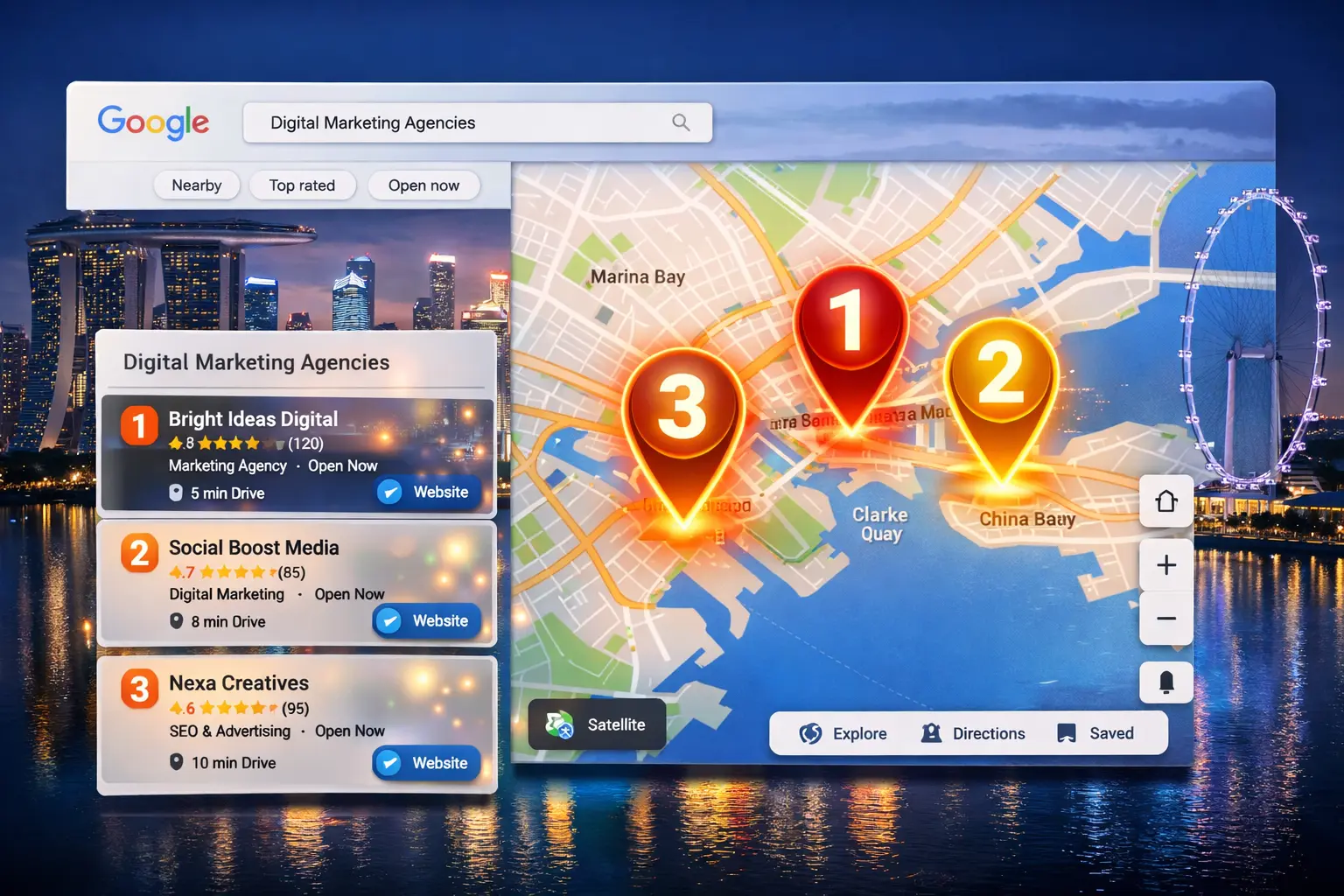
If your business depends on local customers, showing up on Google Maps is no longer optional — it’s one of the fastest ways to generate inbound leads.
When someone searches:
- “web design near me”
- “renovation contractor Singapore”
- “floor polishing service SG”
The first thing they see isn’t your website.
It’s the map pack.
At SilentFrontier, we’ve seen businesses double their inquiries just by improving their local SEO presence — without increasing ad spend.
What Is Local SEO?
Local SEO is the process of optimizing your business to appear in location-based searches, especially on Google Maps and Google’s local results.
It focuses on:
- Your business profile
- Reviews
- Location relevance
- Local keywords
Unlike traditional SEO, local SEO targets customers ready to act immediately.
Why Google Maps Rankings Matter
The top 3 map listings (also known as the “Local Pack”) get the majority of clicks.
If you’re not in that top 3:
- You get less visibility
- Fewer calls
- Fewer website visits
Local SEO is one of the highest ROI channels for service-based businesses in Singapore.
Step 1: Optimize Your Google Business Profile
Your Google Business Profile is the foundation of local SEO.
Make sure you:
- Use your exact business name
- Select the correct primary category
- Add detailed services
- Upload high-quality images
- Include your website link
- Keep your contact details accurate
A fully optimized profile increases your chances of ranking significantly.
Step 2: Get More High-Quality Reviews
Reviews are one of the strongest ranking signals for local SEO.
But not all reviews are equal.
You need:
- Consistent review growth
- Detailed customer feedback
- High ratings (4.5★ and above)
Pro tip:
Ask happy customers to include keywords in their reviews like:
- “web design Singapore”
- “floor polishing service”
This strengthens relevance.
Step 3: Use Location-Based Keywords
Your website should support your local SEO efforts.
Target keywords like:
- “web design Singapore”
- “SEO agency Singapore”
- “interior renovation SG”
Place them in:
- Page titles
- Headings
- Meta descriptions
- Service pages
Local SEO works best when your website and Google profile align.
Step 4: Build Local Citations
Citations are mentions of your business on directories.
Examples include:
- Business listings
- Industry directories
- Local platforms
Consistency is key:
- Same business name
- Same address
- Same phone number
Inconsistent information weakens your ranking.
Step 5: Optimize for Mobile and Speed
Most local searches happen on mobile.
If your website:
- Loads slowly
- Is hard to navigate
- Has poor UX
Users will leave — and Google notices.
Performance directly affects both rankings and conversions.
Step 6: Add Local Content
Content helps reinforce your relevance.
Examples:
- “Best Web Design Trends in Singapore”
- “Cost of Renovation in Singapore”
- “How to Choose a Contractor in SG”
This builds topical authority and supports your local rankings.
Common Local SEO Mistakes
Most businesses:
- Set up Google Business Profile and forget it
- Don’t reply to reviews
- Use wrong categories
- Have inconsistent business details
- Ignore website optimization
Local SEO is not “set and forget.” It requires ongoing activity.
What Results Can You Expect?
With proper local SEO:
- Higher visibility on Google Maps
- More inbound calls
- More website clicks
- More qualified leads
And the best part?
These are high-intent customers ready to engage.
Turn Local Searches into Real Revenue
Local SEO is one of the fastest ways to generate consistent leads for Singapore businesses.
But execution matters.
At SilentFrontier, we don’t just optimize websites — we build complete local SEO systems that position your business where it matters most: in front of ready-to-buy customers.