

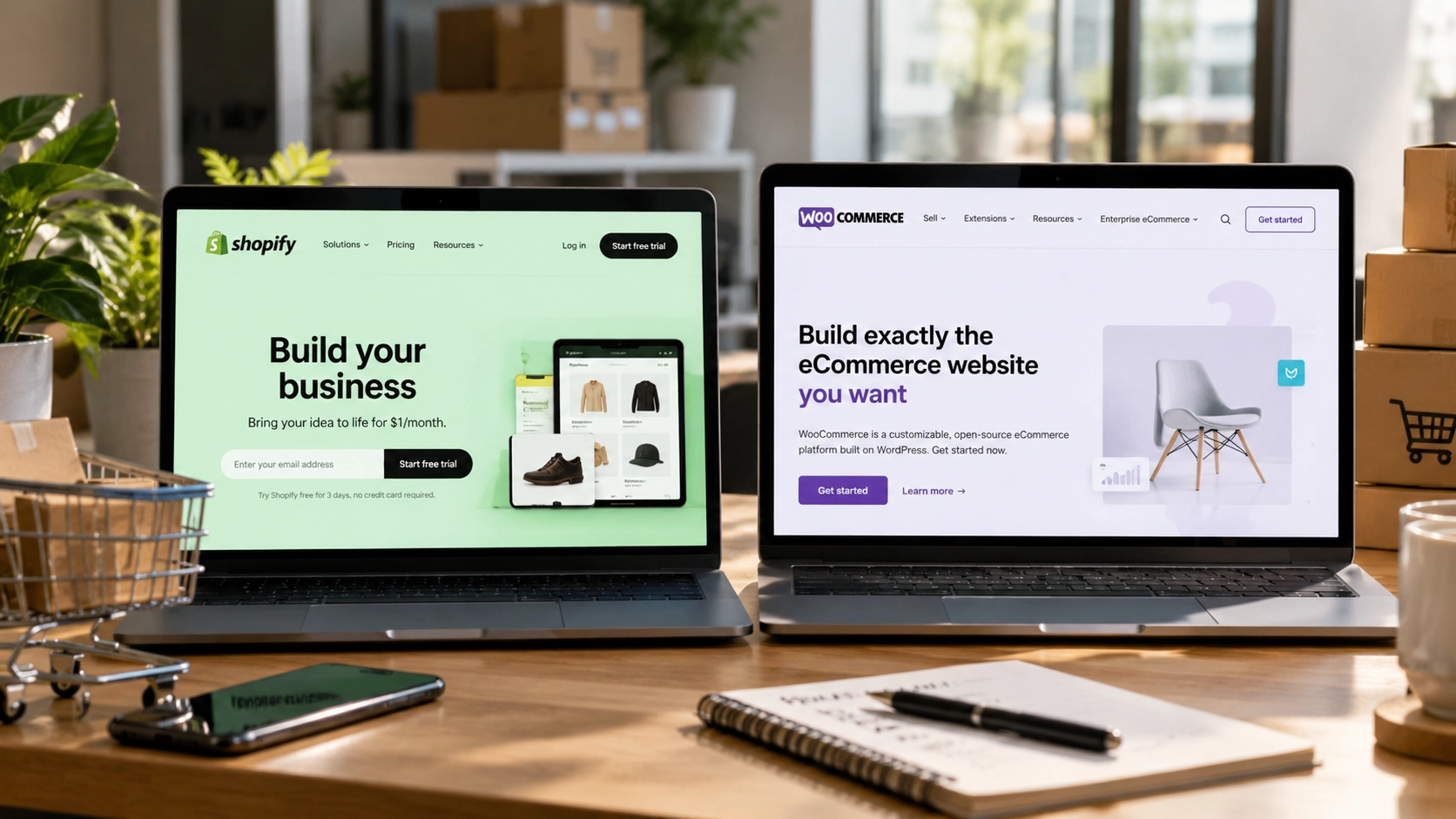
The Shopify vs WooCommerce debate in Singapore is one that every business looking to sell online has to settle eventually. you’ll almost certainly end up asking: Shopify or WooCommerce? And the answer isn’t as straightforward as either platform’s marketing would have you believe. The right choice depends entirely on what your business looks like today and where you want it to go.
This is a comparison written by a team that builds eCommerce stores on both platforms. We’re not selling you either one. We’re just going to be honest about what each does well, what each gets wrong and what we’d actually recommend for most Singapore businesses.
What Shopify Does Well (vs WooCommerce in Singapore)
Shopify Singapore makes it genuinely easy to launch a store quickly. The hosted infrastructure means you don’t worry about servers, security updates or plugin compatibility. The checkout is polished and mobile-optimised out of the box. If you’re a small retailer who wants to test an idea, sell a handful of SKUs and get moving in a few weeks, Shopify gets the job done without requiring much technical input from you.
It’s also hard to break. Because everything is managed by Shopify, there’s a ceiling on how badly things can go wrong with the basics. That’s genuinely valuable if you’re operating without a technical team.
Where the Shopify vs WooCommerce Singapore Decision Gets Complicated
The problem with Shopify isn’t the product. It’s what happens when your business grows beyond the simple use case it was designed for.
Every transaction you process costs you a fee on top of your payment gateway charges, unless you use Shopify Payments, which isn’t always available or optimal for Singapore merchants. Your design flexibility is bounded by the theme ecosystem. Customisations that would take a developer an afternoon on WooCommerce can turn into expensive workarounds on Shopify. And you don’t own the platform. If Shopify changes its pricing, its terms or its feature set, you’re along for the ride.
For Singapore businesses that care about PayNow integration, complex product configurations, custom pricing rules for B2B customers or tight control over their checkout experience, Shopify’s constraints start to show up fast.
What WooCommerce Offers That Shopify Doesn’t in Singapore
WooCommerce is an eCommerce plugin that runs on WordPress, which is already the most widely used web platform in the world. Because it’s open-source, there are no transaction fees, no platform boundaries and no limits on what you can build. Your checkout flow, your product types, your pricing logic and your payment gateway integrations are all configurable to exactly the level your business requires.
The tradeoff is that WooCommerce requires a capable hosting setup and a development team that knows what they’re doing. A badly built WooCommerce store can be slow, insecure and painful to manage. But a well-built one scales farther, costs less to operate and gives your team more control than Shopify ever will.
For a deeper look at what a proper WooCommerce build in Singapore involves, read our post on WooCommerce development in Singapore and our guide on eCommerce website design in Singapore.
The Shopify vs WooCommerce Decision for Singapore Businesses
Here’s how we actually think about this when talking to clients.
Choose Shopify if you’re a small retailer launching quickly, selling a simple product catalogue, don’t have a development partner and want everything managed for you. It gets you selling faster and with less technical overhead.
Choose WooCommerce if you already have a WordPress website and want to add selling capability, you need PayNow and local Singapore payment methods integrated seamlessly, your product catalogue or pricing structure is complex, you process meaningful transaction volumes where per-sale fees add up, or you want to own your platform and data long-term without a third party controlling the rules.
Most Singapore businesses that come to us having started on Shopify reach a point where they’ve outgrown it. They’re paying too much in fees, hitting design walls or struggling to integrate with their existing systems. Moving from Shopify to WooCommerce at that stage is more disruptive than starting on WooCommerce properly from the beginning.
What About Shopify Plus? The Shopify vs WooCommerce Singapore Question at Enterprise Level
At the enterprise end of the Shopify vs WooCommerce Singapore debate, Shopify Plus is Shopify’s enterprise offering. It removes transaction fees, allows more checkout customisation and comes with a dedicated account team. It’s genuinely a good product for large retailers with simple catalogues and no appetite for self-managed infrastructure.
But the entry price for Shopify Plus starts at around USD 2,300 a month. For most Singapore SMEs, that budget builds and runs an excellent WooCommerce store with room to spare on development, marketing and growth. It’s worth knowing the full picture before assuming the premium Shopify tier solves your problems.
Which Platform Do We Build On at Silent Frontier?
Our answer to the Shopify vs WooCommerce Singapore question is WooCommerce for most Singapore eCommerce clients. Not because we’re married to the platform but because it’s the right tool for the businesses we typically work with: companies that want full ownership, local payment integration, design freedom and a platform that scales with them.
When a client genuinely needs Shopify, we say so. But the honest answer is that most Singapore businesses asking the Shopify vs WooCommerce question would be better served by a properly built WooCommerce store that they own, rather than a Shopify subscription they’re renting.
You can see examples of our eCommerce work on the Our Work page. And if you’re still figuring out whether you’re ready to launch an online store at all, our post on 5 signs your Singapore business is ready to sell online is a good starting point.
Choosing between Shopify vs WooCommerce in Singapore is ultimately a decision about ownership and flexibility vs simplicity. Get it right at the start and you save yourself a painful migration later.
Talk to us about your eCommerce project. We’ll give you an honest read on which platform fits your business and what it’ll actually cost to build it right.